Let's go for a ramble (down the path we can't yet see).

Two years ago we decided to be in one place full-time, and I love so much about it. But I also miss a lot about the place we left. Sometimes (all the time?), it's really tough to belong to two places.

This week, I've been feeling stuck. Not in my job or my marriage or my body, but between geographic locations and the reasons my heart tugs back and forth toward each. Our wonderful families and church are in one place, where we've chosen to be, and there are so many fantastic parts of that, perhaps things that I've started to take for granted again now that we've been back awhile. A few hours north is a thriving, bustling city that was always easy to navigate and fun to explore (and for two introvert homebodies, those are very helpful qualities). The little town where we went to school and fell in love. People who knew each of us separately and then came to know us as a couple.

Don't freak out, y'all. I'm not up and quitting the job I love, we're not getting out of the cozy house we rent, nothing is changing. I'm just reflecting (and maybe venting, slightly) on how damn difficult it can be to have to pick one place. To not be able to put yourself in a different spot for even one moment and see how it would feel (of course, even one moment wouldn't truly tell you). Two roads diverged... and you have to choose. And other people matter in the decision. Splitting in two is not an option. They still haven't built that high-speed rail between Atlanta and Charlotte, so here we are.

I'm sharing this not to spark curiosity or questions or conversations or even hurt feelings about where I want to be and why. There are so many reasons that I'm glad we are where we are. But I am expressing this "out loud" because 1) I'm a writer and a connector, it's what I do, and 2) I need to know (though yes, I know already) that we're not the only ones to love two places, while we can only inhabit one.

Maybe it makes sense to have these emotions rise up almost exactly two years after I wrote this piece; maybe I'm always going to feel this bit of loss in July, the anniversary of when I packed up life in the city where I became an adult and moved home. That is very possible, just like the haze of mind and heart on the anniversary of a loved one's passing.

I used to be afraid of admitting that I missed Charlotte in any way, because it must mean that I wasn't happy in Atlanta, that all of this uprooting had been for naught. I had to be 100% all in, happy about every bit of it. See, leaving a place isn't necessarily like a person dying; a geographic location is, typically, still physically there for you to return to. I often find myself secretly satisfied when I hear about friends or acquaintances leaving Charlotte, because it makes me feel like I'm not the only one who left, that change encompasses us all. But I'm trying not to be afraid or ashamed of what or who I miss and when and why anymore--because what good does that really do?

It's difficult for me to view life in phases. I often think of whatever phase I'm in as "forever," even though I know from experience it doesn't work that way. I'm a details person, nose to the current ground, I function day-to-day, routine encompasses our life. In this phase, we're here. We get to spend a lot of time with our families, a true gift. We both have good jobs that teach us a lot and expect much of us, give us great experiences. We don't have kids yet. No dog yet, either.

When I try to think big picture, it mostly just leaves me frustrated that there are big parts of the big picture that I can't fill in yet with detail. I think that's where I am in the moment of this writing, and so I ask you to bear with me. Oh, sure, I can pinpoint a phase after it's passed and I'm on to the next one, but looking forward to who and what and when and where and how it's all going to come together? Those are the answers I want to know, and those are the questions we have to answer as they arise. Can we find a niche here, where our families are, when we claim another city as our favorite? Will we find a neighborhood community in this big city that will give the two of us friendships and embrace our future children?

Ha. I say I live day-to-day, but maybe I'm more "big picture" than I realize--because my detailed brain can sure spend a lot of time on those large, unknown questions, rather than simply existing in this phase of our life together and moseying on to whatever it will show us next.

I know what Rilke said about living into the questions, and I get it, and I know it's true. Often, I don't feel like I have too many questions. Life is good in so many ways. But the ugly heat of July seems to bring it up: what a gift to feel tied to two places. And, at the same time, what a wrench of the heart.

How can I keep from singing?

No storm can shake my inmost calm, while to that rock I'm clinging;

Since Love is Lord of heaven and earth--how can I keep from singing?

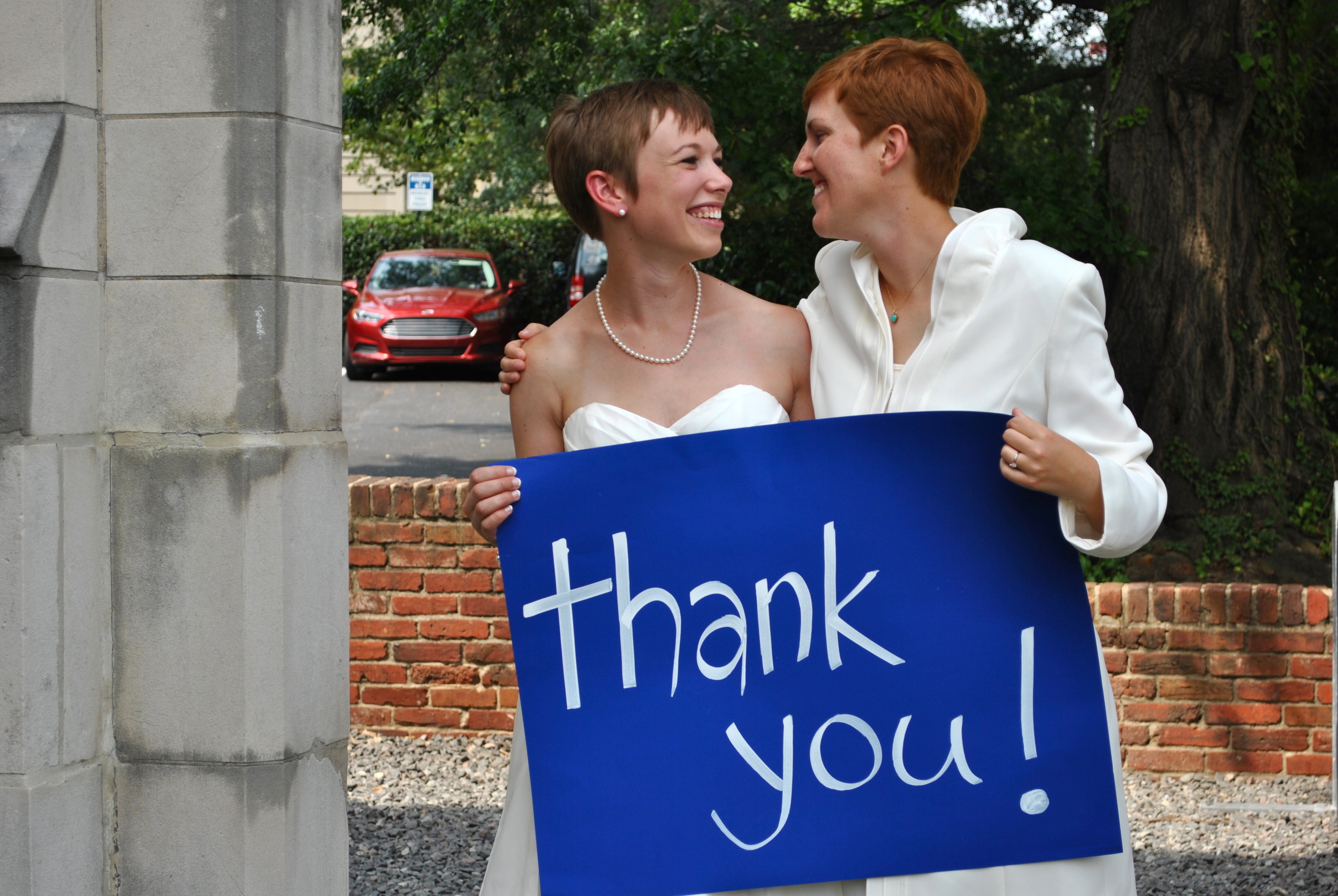
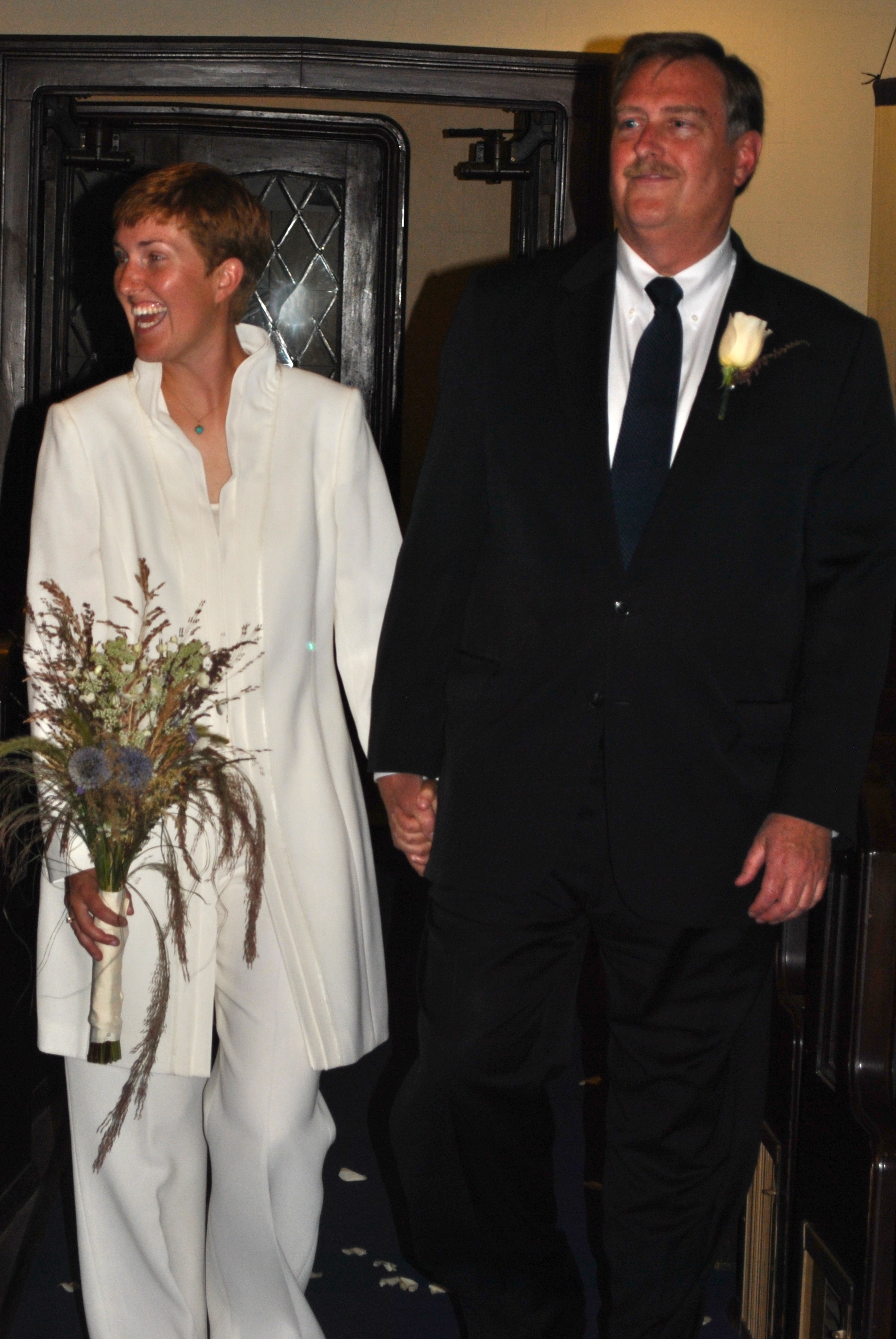
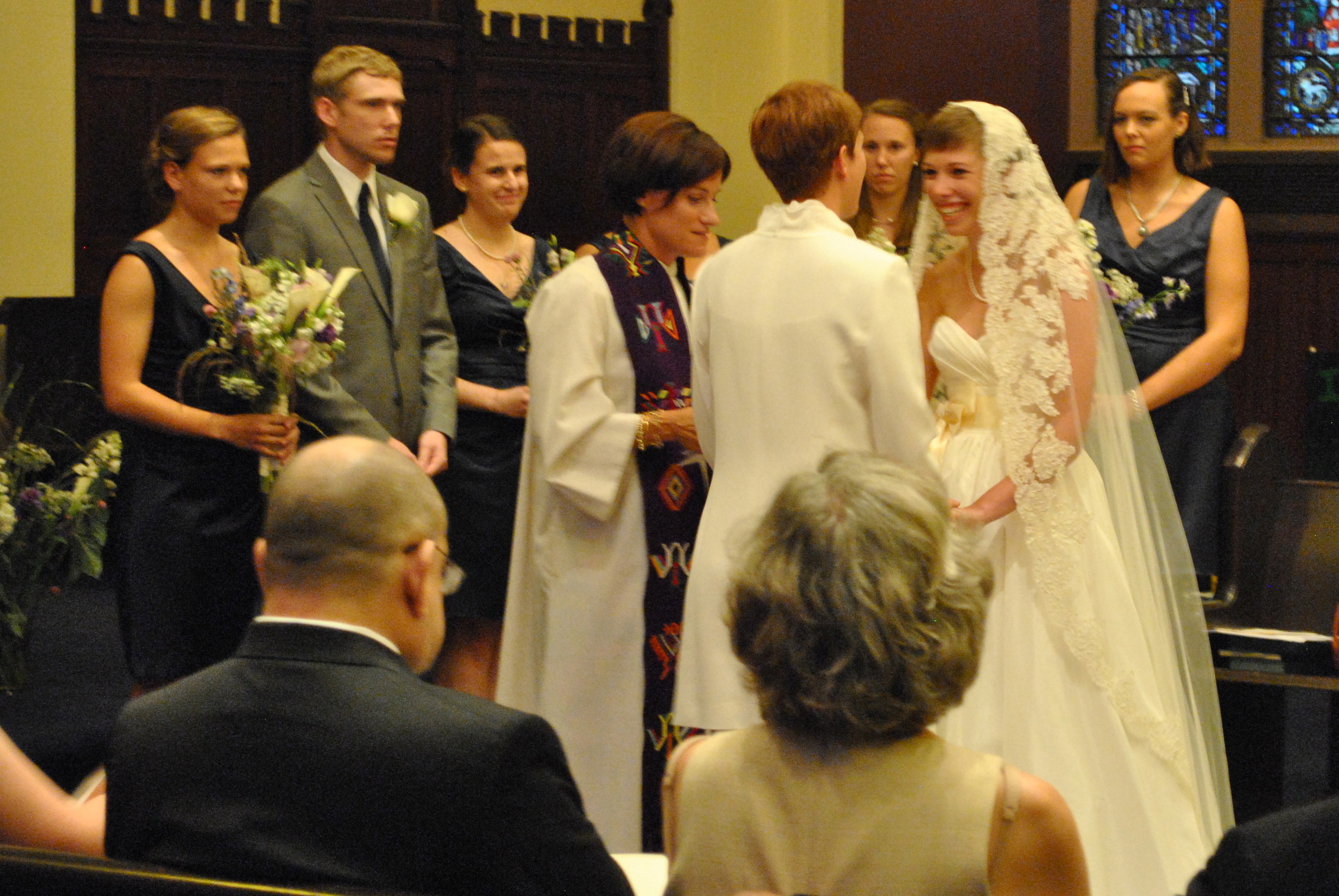
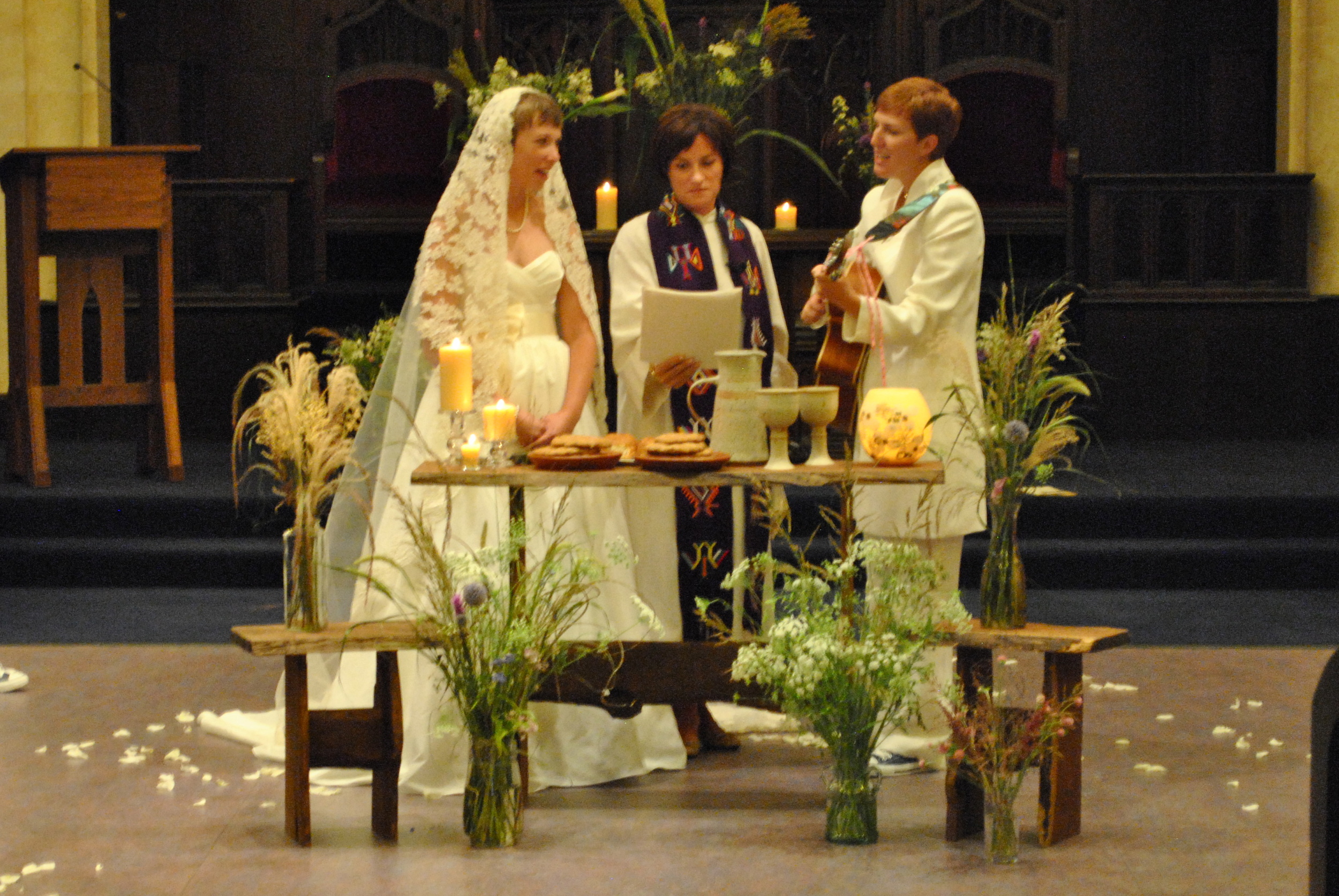
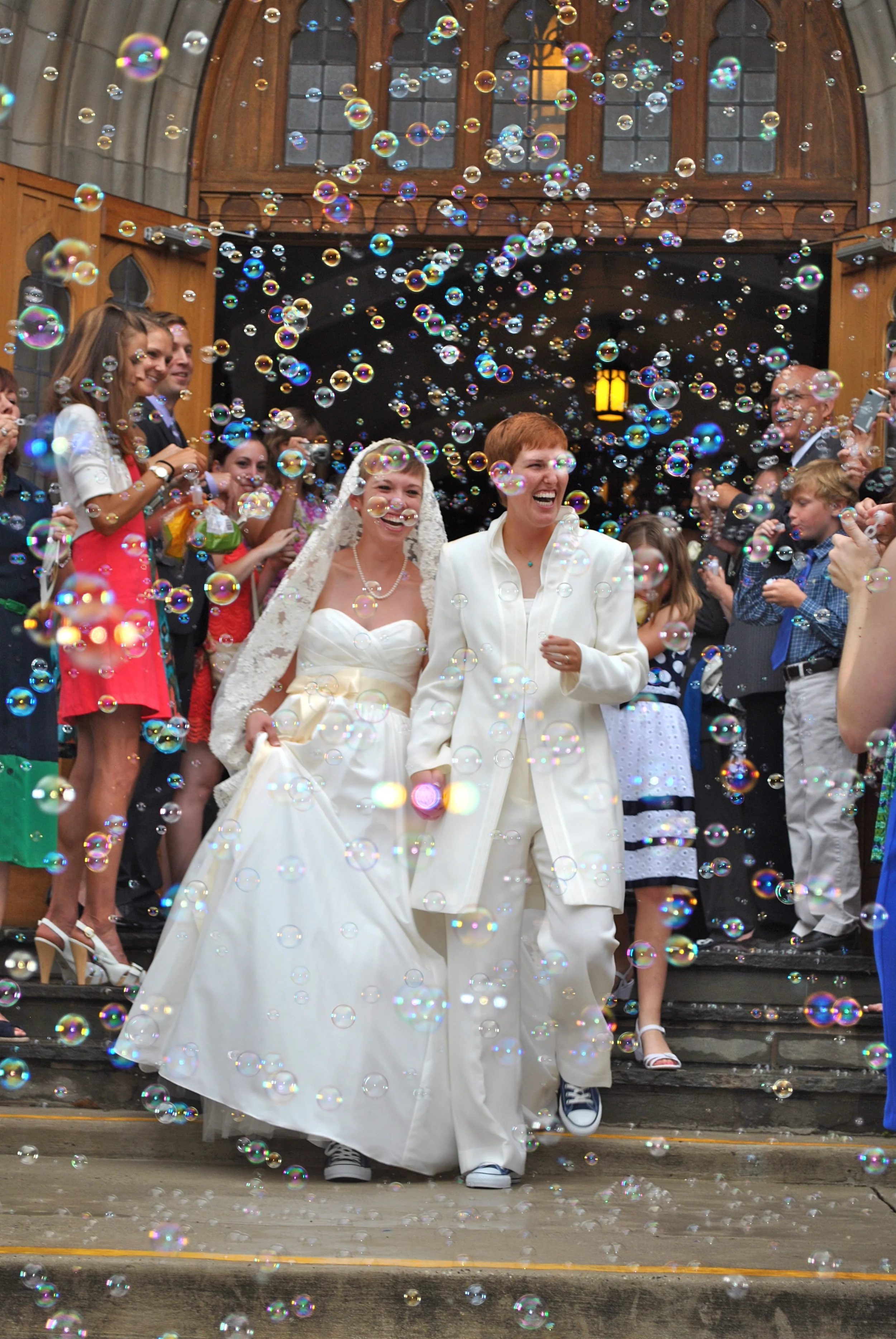
Three years ago today, I officially photographed my first and only wedding (I've unofficially photographed many others). And I'm so glad it was this one. Two of my best friends married each other in a ceremony of great love and deep faith, and the celebrations both before and after expressed the way that they live each day: with joy, laughter, compassion, hope, and openness. Even though we don't live in the same city anymore, they teach me how to be a better human, wife, and Christian every day, simply by being who they are as individuals and as a couple. Happy third anniversary, Sarah and Jamie! And cheers to many more. 

Count me as an ally.

Last weekend, six of us went out to dinner. We all ordered at the same time, sat around talking as it blessedly poured rain outside and we waited for our food to arrive.

Four meals showed up together. "Go ahead, go on and eat!" the other two urged graciously. I took a bite or two. But the minutes without their meals stretched, to where I put down my fork and started craning my neck for the waiter, nowhere to be found. Conversation continued, but it felt odd to be sitting there chatting with two people still missing their food. It was stilted, less enjoyable for all of us. They had ordered their food with us; why hadn't it arrived?

It took me awhile to understand #blacklivesmatter, and the fact that #alllivesmatter shouldn't come after the first hashtag, or at all. I think at first I was a little uncertain, because I wanted to say that my life mattered, too. It's hard not to have that instinct.

Following the acquittals of the policemen who killed Michael Brown and Eric Garner, I stood in the middle of a die-in at the university where I work on a cold December morning, taking photos for the website of the hundreds of people--black and white--strewn across the plaza between the chapel and our building. Professionally, I was there as an observer, a storyteller, a document-er. Personally, I remember wondering my place. If I hadn't been charged with having the camera in my hands, would I have laid down alongside the students and my fellow staff? I was almost relieved to have a working responsibility; I wouldn't have to decide.

If that sounds cowardly to you, then by all means take it that way. There was a piece of me that absolutely felt cowardly that day, as I snapped picture after picture. I am white. What was my place here, as I listened to the cries of frustration, grief, anger that floated from the prostrate crowd? No justice, no peace, no racist police! How long, O Lord? No justice, no peace, no racist police! Sometimes with my camera pressed against my face, my lips moved with the crowd, but silently. What was my place, what should I do? 

At the end of the die-in, Dr. Robert Franklin, a member of our faculty and former president of Morehouse, took the microphone and asked everyone to stand and take the hand of the person closest to us. In this, I did not hesitate, but instead slung my camera strap over my shoulder and grasped the warm hand of my nearest neighbor, a black woman I didn't recognize. Dr. Franklin prayed over everyone, our hot breaths steaming in the bright cold air. When he had finished, he invited us to share words of peace and compassion with one another. I smiled at the woman next to me, said, "Peace be with you." Then I snapped a few more photos, and walked back to my office.

I could have said more to her before I left. I could have taken her hand again, looked her in the eye, and said, "I'm with you. I believe black lives matter. Count me as an ally." But I didn't.

I recall moments in my preteen years and after, when I actively felt gratitude for living in an integrated school system, an integrated world. I couldn't imagine the opposite, and scoffed at the decades of ignorance that had preceded me. We're so far beyond them, I would think. When the first black president, his elegant wife, his two little daughters, strode out onto the Grant Park stage to unending roars, the man I had voted for, the candidate I had wanted to run for president since 2004, I bawled my eyes out. We've come so far.

I'm not ashamed to admit that being part-but-not-part of the die-in rattled me, after those years of sincere but naive gratitude. It was one of the first days when I began to understand that though I didn't participate directly in slavery, or Jim Crow, practices that technically ended before I was born, simply being white means that I have certain limitations and certain capabilities. I have limitations because I can never experience, and therefore never truly understand, what it is to be black in America. Because I can never experience this, I must be quick to humility, slow to assumption. I must listen before I speak. But, being white, I also have the capability to speak after I listen, and by speaking, to help change the conversation.

I began to notice. Look at all those white people in this TV commercial, in this TV show. What if I looked at the magazine rack at the grocery store and saw that 95% of the covers didn't look like me? Hey, I feel really safe now that I see that police car parked over there as I'm walking alone, and there are people who feel the opposite. I don't worry about my husband running out to grab milk or to the gas station. I don't worry about my father or brother being stopped because they look like they don't belong. 

My white life matters, and I have never had to stop and think otherwise. For my black brothers and sisters, that is not the case. It's the best metaphor I've heard, the one that happened in real life the other week: My meal is sitting in front of me while their placemats remain empty, their orders still sitting in the restaurant kitchen window. I start to turn my head this way and that, searching for the waiter. My black brothers and sisters have been searching for centuries. Their plates in the kitchen are cold, and mine is well on its way. I'm not enjoying this anymore, eating while they watch. Nobody wins.

Black lives matter.

If I had written this--should have written this--three weeks ago, this post would end here. But then came Dallas that Thursday night, and Baton Rouge last Sunday. That I believe black lives matter does not mean that I believe police lives don't. Black and white officers have lost their lives in these horrific retaliatory attacks, and my eyes have filled with tears as I drive home and listen to reports about Montrell Jackson, who had a four-month old son with the same name as my brother, or Brent Thompson, who had just remarried. Nobody wins. Violence against police will never solve this.

But neither will violence against my black brothers and sisters. At the die-in, Mike Brown and Eric Garner weighed heavy on our hearts, and Tamir Rice, who had been shot only ten days before. And now, how many more names have I learned after they are no longer breathing? Laquan McDonald, Sandra Bland, Freddie Gray, Alton Sterling, Philando Castile, and there are many, many more.

Last week, I came across the book Without Sanctuary: Lynching Photography in America, by Hilton Als and James Allen, with an introduction by our Atlanta congressman and civil rights activist John Lewis. It was at the home of an acquaintance, and as he handed me the book, he only called it Without Sanctuary, so I was not expecting the black-and-white image on the cover, and it smacked me in the face. A lynched black man--maybe even a teenager--is hanging from the tree, his neck tipped back, lifeless face pointing toward the sky. Below him, white men observe with judging eyes, their mouths set in straight lines. Below them are two white boys, no more than ten years old. One boy is smiling like he's at a birthday party.

The book has 209 pages, and it could be even thicker.

Food at a restaurant is a good metaphor, even a slightly easygoing one. Reality isn't. Black lives matter, my white friends. And if you're afraid that means your own or those of your loved ones do not, I urge you to take another look, to have a conversation with someone who's different from you, or if you need to start with someone who's the same, that's okay too. Talk to me, if you feel so moved. No matter what, I encourage you to breathe in deeply and think about what we take for granted.

If we're scared that our own white lives don't matter simply because we're saying and believing that black lives matter, then we haven't fully examined our own privilege or how we function in the current systems that support it. There's no question that I'm still in the process, and I'm pretty sure that this process never really ends. But it must be an active exploration, one where vulnerability and compassion and awareness are key.

To my black brothers and sisters: I'm with you. I believe black lives matter. Count me as an ally.